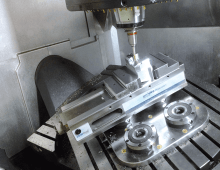
Even though it has been around forever, does the vise have limitations for shops in a competitive marketplace? Do you need to reinvent the wheel to reduce some of its limitations? To evaluate the vise’s viability in today’s manufacturing operations, we need to uncover the most efficient way to apply it.
There’s more than one way to make holes, but some approaches are better than others. Working with customers from across every industry, our team gets to see what works and what doesn’t. These are a few of the interesting questions—and unexpected answers.
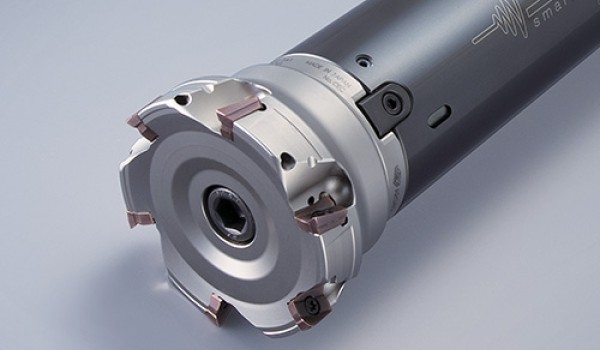
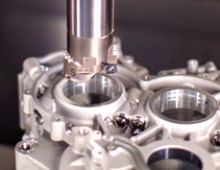
We’ve seen and heard it all when it comes to boring holes. That said, there are always a few questions that pop up over and over. From optimizing modular boring assemblies to deciding between twin boring or high-feed milling, here’s some of our best boring advice.
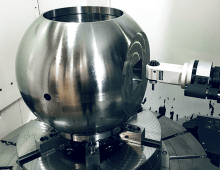
BIG DAISHOWA Angle heads allow you to flip the tool instead of the part, eliminating both unnecessary setup time and repositioning errors for a more cost-effective solution for workpieces.
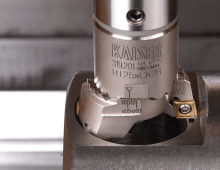
Whether you're performing rough boring operations or precision finishing work, there are a lot of considerations that go into the job. Starting with the right boring head is the first order of business, and there are several considerations to make an informed decision.
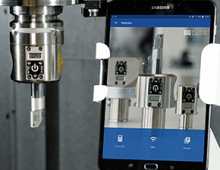
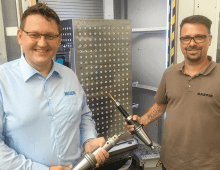
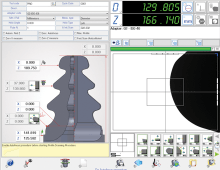
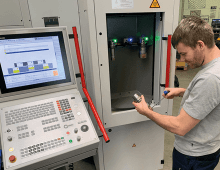
By using digital technology and optimized indexable inserts, Schmauser Müller Metalltechnik has increased process reliability and efficiency in fine boring, as well as increased the lifetime of its tools by a factor of three.