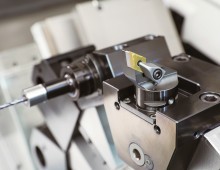
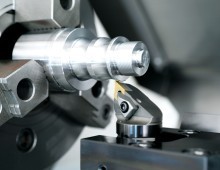
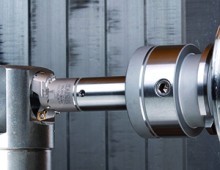
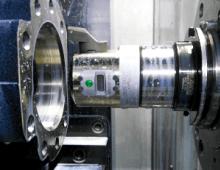
BIG DAISHOWA has introduced the C3 program, an expansion of the BIG CAPTO tool holder line, designed to increase efficiency and precision for small lathes.
A lot of conflicting information has circulated about balancing tools over the years. Let's clear some things up and make life a little easier for you.
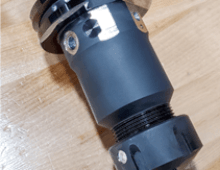
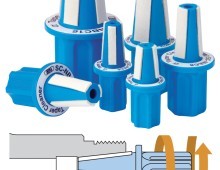
There are three particularly sensitive areas of the tool holder assembly that can experience process-affecting wear and tear and cause a cycle to change.
Micromachining, cutting where the volume of chips produced with each tool path is very small, is not a high-speed operation in relation to chip load per tooth. Rather, it involves a high spindle speed due to cutter diameter. The part may be physically larger, but details of the part require ultra-small profiles achieved only by micromachining. In other words, micromachining is not limited in scope to only miniature parts.
BIG DAISHOWA's HSK-A125 tooling system, for machines such as Makino's T2 and T4 models, is the ideal solution for the aerospace industry – capable of tackling large-scale titanium and other workpieces on massive tables.
BIG DAISHOWA is expanding its range of BIG Capto tool holders with the addition of a new size, C4, which is becoming increasingly popular as a quick-change system for turret tooling on lathes.
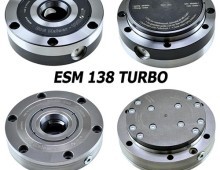
The mid-size diameter and adaptability to custom fixture designs make the Unilock 138 series BIG DAISHOWA’s best-selling round chuck workholding solution.
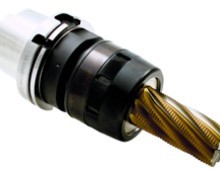
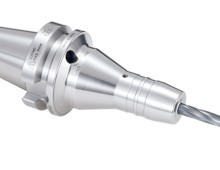
Tool holders play a critical role in connecting elements maximizing machining performance, however, several different styles are available and the most suitable one will depend on the operation.
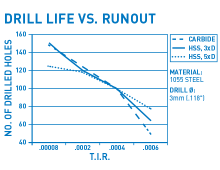
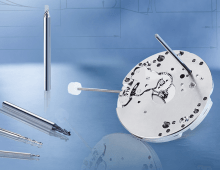
This new micro deep-hole drill from BIG DAISHOWA’s Sphinx line provides a time-saving option for creating wire EDM starter holes, averaging 5X faster per hole according to testing.
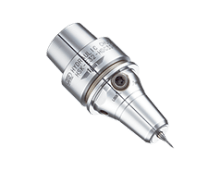
Shrink-fit and hydraulic holders are both useful in low clearance, tight work envelopes found in moldmaking and multi-axis machining applications. When deciding which one to use, their differences will guide your choice. Here are some of the fundamental contrasts to help you decide which holder type is best for your work.
With a little knowhow and the right tools, see how you can significantly reduce cycle time by rough boring instead of performing a helical interpolation with a mill.
The return on investment from digital boring comes from the time saved making adjustments on the spindle, as well as the increased adjustment accuracy.