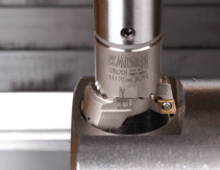
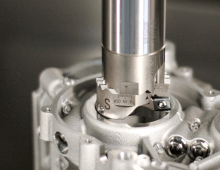
Even the most well-planned boring process may not achieve the desired result. We’ve provided solutions to common rough boring problems to help get you back on the road to productivity.
What’s a good sign that a company is doing well and that they are constantly seeking better ways to serve their customers? The need to construct new facilities, of course.
No matter what, a new machine represents a significant cost in a manufacturing project. This investment can be compromised if it is not tooled up properly.
Workholding plays a critical role in the metalworking equipment equation. Chuck condition is becoming even more important in multi-axis machining where additional angles and motion can amplify problems.
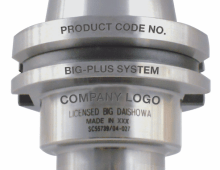
When one variable can make an impact on the result, as in metalworking, it’s a good idea to eliminate as many as possible. Each BIG DAISHOWA part is built to fit precisely and work specifically within each finished product.
Learn how high-quality boring tools and digital technology improve accuracy, reduce downtime and increase ROI, helping shops overcome common challenges and achieve more consistent machining results.
There’s a lot to consider when deciding how to tool up a new machine. Committing to a thorough tooling selection upfront is vital. Think about your tooling and machine tool as a symbiotic partnership: what affects one affects the other.
When it comes to boring, there are several factors that can lead to poor performance. Whether it’s long cycle times, short tool life or poor bore quality, any or all these factors may need to be addressed in order to increase productivity. Although different, these issues are often closely linked in a given application.
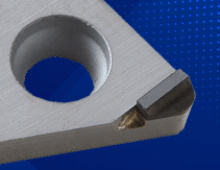
While we specialize in holders, we do offer some specialized cutters with these materials and often get questions about PCD and CBN inserts. Here we tackle some of the most frequently asked questions.