

Latest Posts
How to Find the Right Tooling Partner
Key Points
-
Choosing the wrong tooling partner can quietly erode productivity, quality and profitability, leading to costly equipment damage, missed expertise and long-term operational issues.
-
Strong tooling partners stand out through in-house quality control, verified precision and measurement standards, documented guarantees and product designs that maintain accuracy over time.
-
Beyond products, the best partners provide deep technical and application support, a proven reputation, proper licensing and a collaborative approach focused on long term shop success.
When it comes to modern metalworking, machine tool manufacturers are under the microscope. Today’s shops demand new tech innovations, sleek machine models, easy-to-use interfaces and exciting continuing education opportunities. But how closely are you assessing your other partners? Tooling suppliers are just as high-stakes—sometimes more so—when it comes to ensuring quality output, operational efficiency and profitability. And choosing wrong can have consequences.
The Hidden Cost of the Wrong Tooling Partner
If you make a bad choice on a machine tool, there may be obvious and immediate consequences on your shop floor, often in the form of frustrated employees. But tooling partner decisions are a silent killer, wreaking havoc on productivity and quality over the long term in ways you may not even realize.
Here’s one story that’s anything but hypothetical: One manufacturer invested over a million dollars in a state-of-the-art machining center, only to outfit the 200-tool magazine with bargain-basement tool holders. The result? Within a year, the spindle was damaged beyond repair. The replacement cost: $80,000, or several times more than premium tooling would have cost in the first place.
It’s not just machine, tooling and workpiece damage. Choosing a sub-par tooling partner often means you miss out on key application expertise and product selection guidance that can help level up operations. That’s the difference between lapping the competition and getting left in the dust.
So how can you make sure that your tooling partner is up to snuff? BIG DAISHOWA President/COO Jack Burley had some invaluable insider insights.
Assess Their Quality Control Processes
The difference between a precision tool holder and a problematic one often comes down to how it's made and who controls the process.
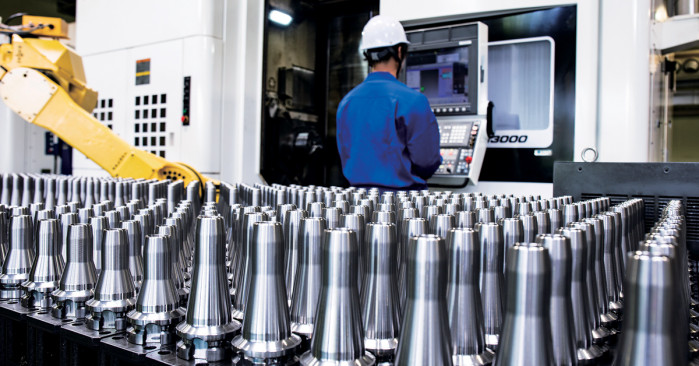
Burley emphasizes this point: "A tool assembly is made up of many different parts. And one of the biggest strengths a tooling partner can have is to manufacture everything in-house. That means all the parts that go into a tooling assembly.”
This integrated approach stands in stark contrast to many tooling manufacturers who outsource components globally. Small tolerance differences compound into serious problems.
Here are some specific things to look for and questions to ask of potential tooling partners:
- What steps in the tooling manufacturing process are done in-house vs. outsourced (manufacturing, heat-treating, coating, grinding, assembly, etc.)
- What are the specific details around these steps and processes?
- Do they maintain detailed records of their processes and compliance with precision standards?
Check Their Precision and Measurement Standards
Speaking of precision standards, when it comes to tolerances, measurements and specifications, not everything is always as it seems. Claims about precision are easy to make but harder to verify. A reputable tooling partner should provide detailed documentation of their quality standards and the proof that they meet them.
For example, many manufacturers claim their tool holders meet AT3 tolerance specifications, but testing often reveals they fall short of this standard. Truly premium manufacturers grind steep taper tools to AT2 tolerance, which is often better suited for spindle/taper contact.
Can your prospective tooling partner brag about their material and manufacturing standards—from thermally matched component materials to ground finishes for superior performance?
And beyond precision standards, is their product development innovative?
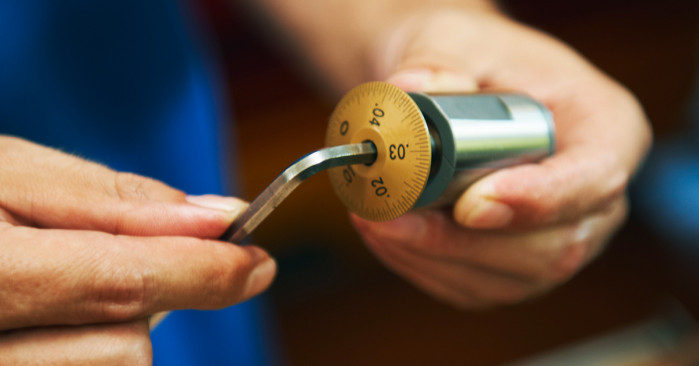
"Our fine boring tools have a precision-guaranteed micro-metric setting built into the tool. The dial on the face makes it easy to see and it has a setting capability where we can easily adjust to a small increment of 1 or 2 thousandths of an inch per diameter," says Burley.
This level of attention to detail in product design isn't just about the initial measurement, but also about maintaining that precision over time. "One of our keys for maintaining repeatability is that the tool carrier, when it's adjusted, strictly moves in one direction: 90 degrees to the axis of rotation," Burley continues. "The tool has in it a locking system, which we can unlock and apply a certain amount of torque for each tool, which does not change the size."
Burley explains that this unique design guarantees that when the tool moves from the magazine into the spindle, particularly via a high-speed tool changer, the tool’s diameter setting does not change.
These types of precision locking systems and micrometer features are added insurance that tool assemblies will stay in position for the highest possible precision and repeatability, no matter the external factors.
Ultimately, it comes down to guarantees. Does your tooling partner guarantee their precision specifications? Can they provide test data? Are they willing to put their tools to the test in your shop, risk-free? The answers to these questions reveal a lot about confidence in their product.
Understand Their Level of Technical Support
The skills and expertise gap is real. Is your tooling partner positioned to help you address it? As many metalworking facilities grapple with workers retiring, the technical support provided by your tooling partner becomes critical. How will you know if they can help? Ask about:
- Their experience. BIG DAISHOWA’s team has 200+ years of combined engineering experience, with individual engineers who have 20+ years of in-the-field wisdom.
- Real application support. We’re not talking brochures and user manuals. Can someone from the company come to your site, assess your setup, identify the root cause of problems and recommend customized solutions?
- Programming support. Not all tooling partners can recommend programming tips and tricks that can help address issues and improve productivity. But if you find one that can, hold on tight.
Ultimately, the relationship between tooling supplier and customer shouldn’t be purely transactional, but rather collaborative. If you feel like you’ve met a person or team who is invested in your success, that’s a good indicator of a fruitful partnership.
Look Into Their Reputation
In an industry where new suppliers regularly appear (and disappear) overnight, longevity and reputation matter. What’s on paper is well and good, but what’s the word on the street? Do they have long-term customers that you know and trust? How does the brand fare in demanding industries where the stakes are high? Do they have strong relationships with major machine tool manufacturers? Have their products changed the game in exciting and valuable ways?
When Burley reflects on BIG DAISHOWA's history, he notes that solid reputations aren’t earned overnight.
"It was our dream that someday we would be recognized as one of the industry leaders in North America. And that came with a lot of time and effort to get us to where we are today,” he says. “Our early success was based on making our Higher Performance Guaranteed a part of our mantra. With every job, it was about making sure we could get results for our customers. And we've lived by that for many, many years now.”
Check the Licensing
One final and more specific area that deserves attention: licensing. Is your tool holder licensed to create products that work specifically with the stated spindle interface? Take BIG-PLUS tooling. It’s the only interface that provides true dual contact between the tool holder flange and spindle face, in addition to the taper contact, for improved rigidity and precision.
The market is flooded with tooling companies that claim "dual contact" tool holders, but if they’re not BIG-PLUS licensed, the quality difference is substantial. Unlicensed holder manufacturers don’t have the master gages or manufacturing know-how necessary to match our system.
Building a Strong Partnership
The lifetime value of a strong tooling partner isn’t always directly measurable, but for those who have experienced it, it’s palpable.
"We have customers that have been buying BIG DAISHOWA for many years, and they always harp on the reliability,” Burley says. “The tools last, they repeat and they perform their function day in, day out, week in, week out, without any performance flaws or problems. All so that, if a problem does occur, tooling is the last thing they are inclined to look into. It’s that trust that is invaluable.”
But choosing the right partner is just the first step. Maximizing that relationship is where the real value shines:
- Engage them in problem-solving. Ask for application assessments. Request recommendations for improving performance. The best partners welcome these opportunities because they demonstrate the value of their expertise.
- Take advantage of free trials. Premium and specialized tooling can come with steep up-front investments. But you can make sure the performance will pay off with a free trial period. Any premium tooling manufacturer worth its salt will be happy to oblige.
- Measure and document. Prove performance, to yourself and your higher-ups, by measuring performance improvements: cycle times, scrapped part rates, tool life, etc.
Still on the hunt for a quality tooling partner, or just want to introduce new options into your shop? Get in touch with the experts at BIG DAISHOWA. For us, it’s not just about providing a solid partnership. It’s about finding the right tools for your needs and objectives, and applying them in the smartest way possible.
Categories
Did you find this interesting or helpful? Let us know what you think by adding your comments or questions below.

Add new comment