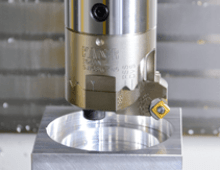
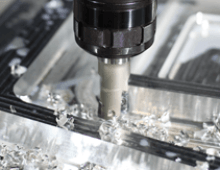
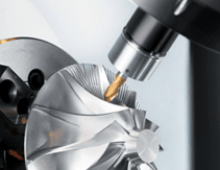
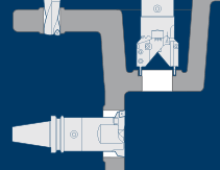
Anyone who’s made holes understands the difficulties that can arise: vibration, wander and even breakage. When it comes to production-level volume, these issues become even more limiting. Many turn to helical interpolation with a mill as a reliable way to rough out holes. We’re here to tell you there’s a faster, easier option.
Machining at higher speeds can save time and money, however, increasing the speed also means increasing the inherent risk in the situation. To maximize speed potential, a holistic approach that considers tool, holder, machine and operator is essential.
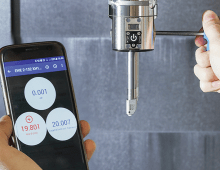
Exciting improvements in automation are already on their way—higher productivity, increased safety, greater throughput and less scrap. Tool digitalization provides opportunities for production improvements, like our EWE digital fine boring tool. It displays the actual diameter of a tool, makes adjustments much simpler and faster, and reduces human error.
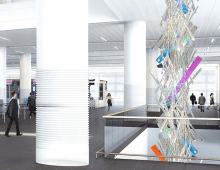
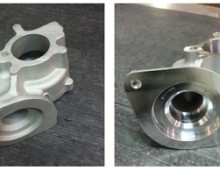
Ansonia Manufacturing, the only machine shop in the town of Sonoma, California, discovered the EWN2-32ExER32 boring head and used it to complete a tricky hardware component job for a “live” glass art sculpture.
The precision and ruggedness of KAISER modular boring tools deliver measurable performance advantages by reducing costs and cycle times, all while allowing the flexibility and versatility to upgrade boring tools to meet today’s demanding requirements.
BIG KAISER’s digital precision boring heads, from Swiss partner KAISER were part of a case study alongside Impact CNC in the September issue of Modern Machine Shop.
John Saunders, a machine owner known for running the popular CNC machining YouTube channel, stopped by BIG DAISHOWA to discuss presetters with our product manager.
For many shops setup may be the silent time killer. Shaving just 15 minutes off each setup can add up to tens of thousands of dollars in savings. But where to start?