

Latest Posts

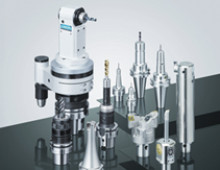
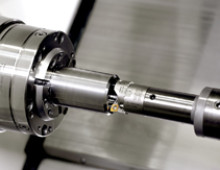
Right Tool. Right Job. Right Outcome.
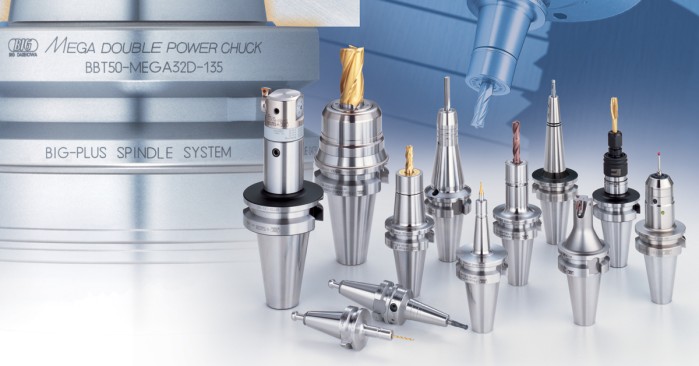
Here at BIG DAISHOWA, we like our car analogies. You may have heard the one about how you wouldn’t put crappy tires on a Ferrari, so why use sub-par tooling on a top-of-the-line machine? And speaking of a Ferrari, that’s a machine made for a performance ride. As high-performance as it may be, you’d never take it on an off-roading adventure. For that excursion, a Jeep might be more suitable. In both instances, quality tires matter, but the application will determine the best set of wheels.
If you’re following, you’ve probably guessed we’re talking about choosing the RIGHT tool for the job, the one that will provide the best possible performance and quality for your application and goals. It’s not a perfect science, and the possible machine/spindle type/tool holder/tooling combinations are nearly endless. But just like a good car repair technician, having the right tooling application expert on speed dial can be a lifesaver when it comes to troubleshooting.
Red Flags on the Road to Quality
Before we dive in, let’s explore what can go wrong when you take a sports car on a dirt road. Or, in our case, tooling that isn’t a match for the application. Unlike the car example, it’s not always as obvious. So how will you know?
Chatter and vibration are usually the most obvious signs. The reasons this happens are myriad, but, in the absence of machine issues, they almost always relate back to tooling. If not addressed, you’ll notice poor quality and even scrapped parts.
Another telltale sign is inconsistent results. If you're getting one or two good finished parts followed by a bad one, something fundamental needs to change. Poor tool life is another red flag. This one can be tricky because it’s hard to benchmark. That’s where testing different tooling setups on the same operation comes in. Comparing the results will quickly shed light on the issues and potential fixes.
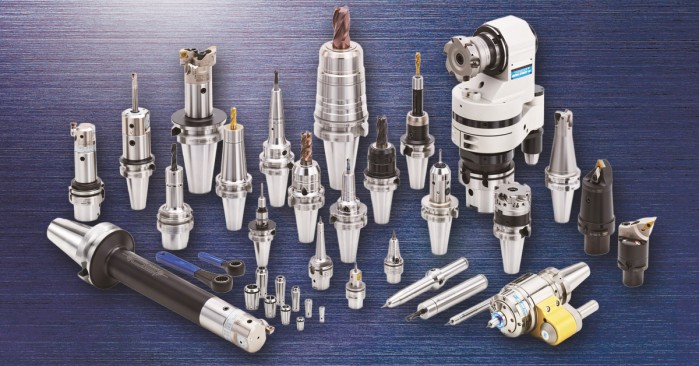
Real-World, Right-Tool Examples
Let’s explore a few examples of how finding the right tool for the job makes a world of difference.
Challenge: Hole Roundness
The Right Tool: Quality Boring Tools
One customer in the marine industry was having major issues holding roundness on a bore, using an interpolation milling approach on an older machine. Despite multiple attempts to optimize the process, they couldn't get the precision and repeatability the job demanded.
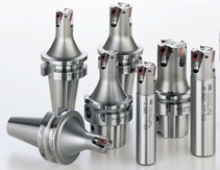
After some initial assessment, we suggested a switch to boring, using our EWN boring head. After the switch, the roundness problem completely disappeared. In fact, the results were so dramatic that what started as a single troubleshooting effort prompted a shop-wide tooling upgrade.
Challenge: Pull-out Issues in Milling
The Right Tool: Milling Chuck
Pull-out issues in demanding milling applications? You might be compensating with lower speeds and feeds, but there’s a better way.
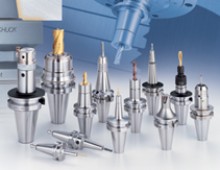
Shops that have switched from collet chucks to BIG DAISHOWA milling chucks enjoy significantly better gripping force and rigidity, and can push cutting parameters, with confidence, for better productivity.
Challenge: Tool Life in Tapping
The Right Tool: Mega Synchro Holder
One of our shops working with 4140 steel was struggling with poor tap life, averaging only 35 holes per tap. The frequent downtime and added tooling costs were a major damper on productivity and profitability. The fix was simple, without setup modifications: a switch to our Mega Synchro tap holders.
As a result, tool life skyrocketed, from 35 holes per tap to 2,500. This 71x improvement is proof that not all tooling optimizations require an intensive upfront investment in time or money.
Challenge: Ultra-precision Machining
The Right Tool: Hydraulic Chuck
In precision drilling and reaming, five-axis finish milling where clearance is critical, or for small-diameter tooling setups, many turn to shrink-fit holders. But there’s a better option: hydraulic chuck technology.
Because shrink-fit holders rely on an induction heating cycle to work properly, performance can degrade or change with each heating cycle. For this reason, hydraulic chucks offer more repeatability. What’s more, shrink fit holders can be tricky for smaller-diameter tools because it can be difficult to get the tool out of the holder. Finally, with hydraulic chucks, there’s no need for additional, often expensive induction heating equipment.
Challenge: Deep Boring Success
The Right Tool: Smart Damper
One OEM customer was having trouble machining pin bores in bucket arms: deep holes through welded structural steel where two pieces must be line-bored simultaneously from one side. The long reach needed put the operation at serious risk of vibration and, in turn, issues with the final fit and integrity of the bucket attachments.
This was a clear job for Smart Damper technology, which works out-of-the-box to significantly reduce vibration in challenging, long-reach applications. In addition to the vibration-damping qualities, users appreciate the simplicity—no springs, oil, or tuning required.
The technology was so impressive to operators that it became a company-wide mandate, with Smart Damper rolling out across multiple plants.
Another time Smart Damper was right for the job: deep precision bores for engine block manufacturing. For our racecar engine manufacturing customers, vibration is non-negotiable as issues with finished holes can hamper engine performance. But traditional approaches require extensive finishing operations to clean up and straighten the bores. With the addition of smaller sizes to the Smart Damper lineup, engine block manufacturers have a new tool up their sleeve.
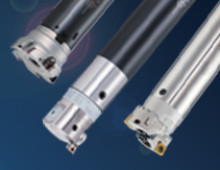
Another valuable tool for deep boring success is solid carbide boring bars, which provide significantly better stiffness than steel. They offer a natural vibration-damping effect so operators can boost cutting parameters without sacrificing workpiece quality.
Challenge: Chatter in Deep Boring
The Right Tool: Sharper Nose Radius Inserts
Sometimes it’s less about the type of toolholding setup and more about the insert choices. For customers experiencing chatter in boring operations, a sharper insert nose radius can make all the difference. Sharper geometries reduce cutting forces, which lessens vibration.
Image
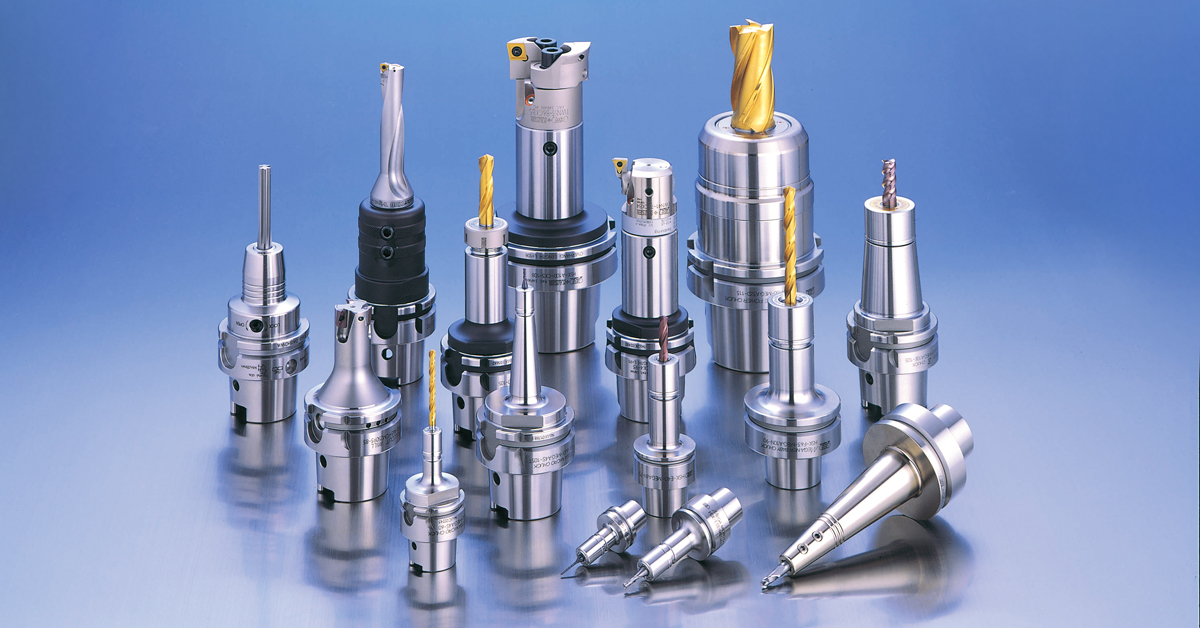
What’s Your Right Tool?
Getting to the bottom of persistent machining challenges can be complicated. That’s why it’s vital to have a tooling partner who has the broad and deep machining application expertise to help troubleshoot. So what’s the right tool for your machining challenge or opportunity? Talk to us today to find out!
Categories
Did you find this interesting or helpful? Let us know what you think by adding your comments or questions below.


Add new comment