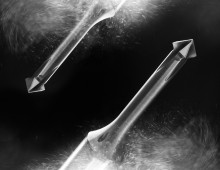
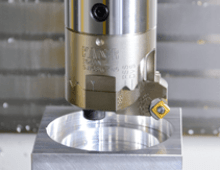
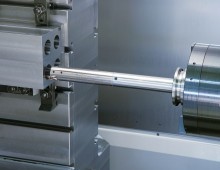
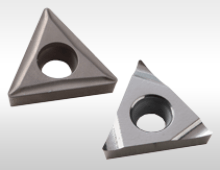
Chamfering the entry and exit of 0.80mm to 6.00mm holes can be a tedious, time-consuming process. The Noventa from SPHINX can transform this process using an innovative geometry that improves cycle time, tool life and surface quality.
Everyone wants to get the most out of their tool holders. While some may take a set it and forget it approach with holders, it’s not recommended, as they have a direct impact on both parts and machinery. Here are some tips to ensure your holders deliver.
When it comes to securely and accurately situating material on a machine table, there’s often more than one way to get the job done. With that in mind, consider these fundamental factors before purchasing new workholding.
A lot of conflicting information has circulated about balancing tools over the years. Let's clear some things up and make life a little easier for you.
Anyone who’s made holes understands the difficulties that can arise: vibration, wander and even breakage. When it comes to production-level volume, these issues become even more limiting. Many turn to helical interpolation with a mill as a reliable way to rough out holes. We’re here to tell you there’s a faster, easier option.
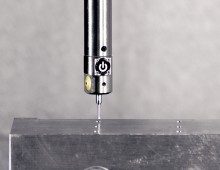
BIG DAISHOWA is expanding its offering of digital boring heads to include head sizes down to the CKB1 modular tooling connection size, which means boring down to Ø.787” for Series 310 peripheric heads, and Ø.016” for Series 112 centric boring heads.
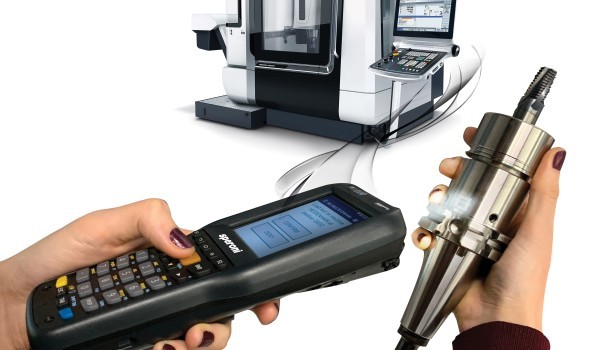
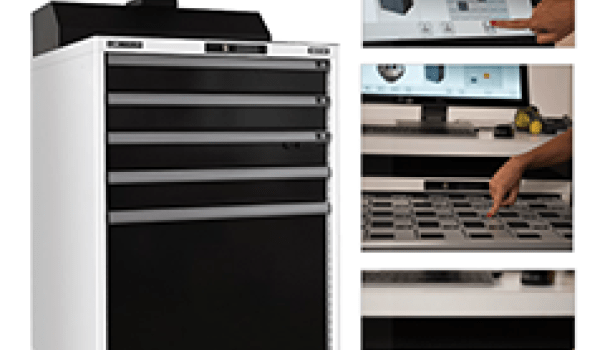
SPI is a post-process communication with the machine tool control. Measure your tool, print a label and scan the data directly to your machine tool control.
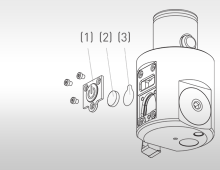
BIG DAISHOWA has released two smaller sizes of the EWN Smart Damper precision boring heads, which eliminate vibration in deep-hole finish boring with a patented damping system.
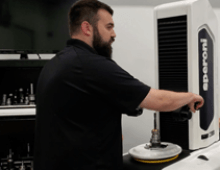
Current travel and visitor restrictions continue to disrupt the normal schedule of service calls to manufacturers. To keep our customers up and running, the BIG KAISER Tool Measuring Solutions Department offers remote maintenance sessions.