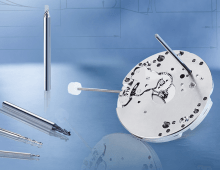
Micromachining, cutting where the volume of chips produced with each tool path is very small, is not a high-speed operation in relation to chip load per tooth. Rather, it involves a high spindle speed due to cutter diameter. The part may be physically larger, but details of the part require ultra-small profiles achieved only by micromachining. In other words, micromachining is not limited in scope to only miniature parts.
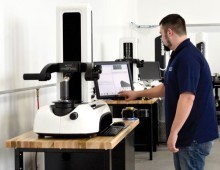
Tool management system (TMS) software & a tool presetter can accomplish both cutting cost and increases in productivity for a shop’s day-to-day activities.
BIG DAISHOWA continues to deliver world-class service and support by eliminating the need to ship tools abroad for repair, minimizing customer downtime.
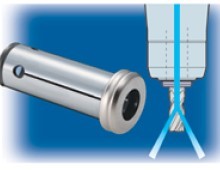
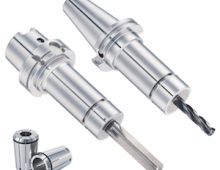
BIG DAISHOWA introduces the Perfect Jet Collet, designed to optimize coolant supply in high-speed operations, resulting in better coolant delivery and the option to seal the collet for coolant-through tools.
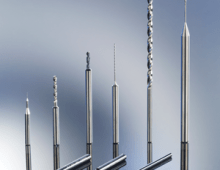
The BIG DAISHOWA SPHINX drill series includes more than 2,000 different drills under 3 mm in diameter as standard. With a range of 0.05 to 3 mm diameters.
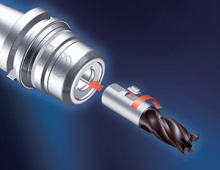
BIG DAISHOWA introduces the Mega Perfect Grip, a simple to handle, heavy-duty milling chuck for heat resistant super alloys (HRSA) that eliminates end mill pullout under heavy torque loads.
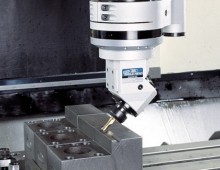
Keeping pace with modern manufacturing demands often means bridging the gap between design and production. Creative and resourceful applications of tooling and accessories, such as angle heads, can get complex parts out the door.
When used together with a machine that delivers on speed and accuracy, ChipFan and T-Slot Clean help machines reach maximum levels of productivity—even during downtime.
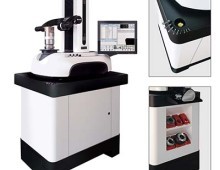
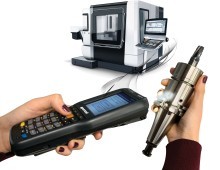
The SPERONI SPI is the newest of BIG DAISHOWA's Industry 4.0 upgrades to its offering of tool presetting solutions. SPI dramatically reduces the time and steps needed to transfer precise and accurate tool measurements to a machine tool.
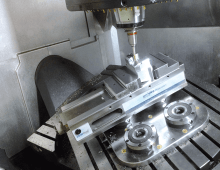
Even though it has been around forever, does the vise have limitations for shops in a competitive marketplace? Do you need to reinvent the wheel to reduce some of its limitations? To evaluate the vise’s viability in today’s manufacturing operations, we need to uncover the most efficient way to apply it.