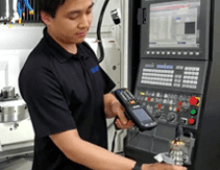
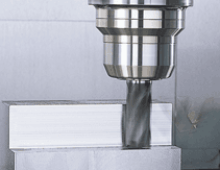
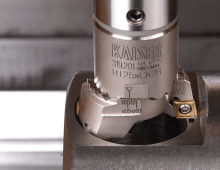
If there’s anything we love as much as the sound of those engines, it’s the manufacturing technology and know-how that go into making high-performance, race-winning cars. Together with Team Penske, and just in time for the 2020 season start at Daytona, we are launching a series of short videos to talk machine shop.
Understanding and controlling runout is crucial for any machine shop looking to maintain competitive advantages in today's precision-driven manufacturing environment.
Unlock better machining results with the right tool holders. Learn how design, selection and maintenance impact accuracy, tool life and overall performance.
Machining at higher speeds can save time and money, however, increasing the speed also means increasing the inherent risk in the situation. To maximize speed potential, a holistic approach that considers tool, holder, machine and operator is essential.
There’s more than one way to make holes, but some approaches are better than others. Working with customers from across every industry, our team gets to see what works and what doesn’t. These are a few of the interesting questions—and unexpected answers.
Machinery tooling and equipment that get parts produced the fastest is always the best choice, right? But what else needs to be considered when choosing equipment for low- to mid-range production volumes?
We’ve seen and heard it all when it comes to boring holes. That said, there are always a few questions that pop up over and over. From optimizing modular boring assemblies to deciding between twin boring or high-feed milling, here’s some of our best boring advice.
Jet engine manufacturers have found that even the most infinitesimal imperfection can produce catastrophic results; absolute precision is the name of the game in the aerospace industry.
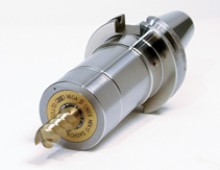
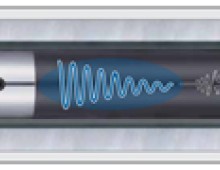
Smart Damper products are designed for deep-hole boring with BIG KAISER’s CKB modular boring system, and also for extended reach milling with both inch- and metric-pilot shell mills and face mills.