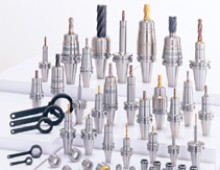
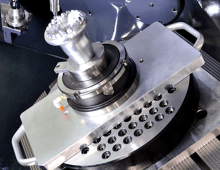
Considering we deal in some of the smallest parts and pieces in the machining world, we fully understand that your results will be only as strong as your weakest link.
After years of close observation and collaboration with manufacturing companies of all sizes, BIG DAISHOWA Seiki engineers have learned how the choice of tool holders affects production costs on the shop floor.
Automated solutions are becoming more and more prominent in the machining industry. BIG DAISHOWA discusses the market’s current state, its latest developments and what it might look like in the future.
A machine’s spindle is one of the key links in the machining chain. It makes regular inspection and spindle maintenance critical to getting the most out of your equipment and maintain process efficiency.
With state-of-the-art toolholding technology, Jorge Rucoba’s machine shop doubled its process indicators and gained competitiveness in the Mexican mold market.
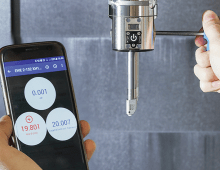
Exciting improvements in automation are already on their way—higher productivity, increased safety, greater throughput and less scrap. Tool digitalization provides opportunities for production improvements, like our EWE digital fine boring tool. It displays the actual diameter of a tool, makes adjustments much simpler and faster, and reduces human error.
Jet engine manufacturers have found that even the most infinitesimal imperfection can produce catastrophic results; absolute precision is the name of the game in the aerospace industry.
There’s a lot to consider when deciding how to tool up a new machine. Committing to a thorough tooling selection upfront is vital. Think about your tooling and machine tool as a symbiotic partnership: what affects one affects the other.
Learn how to evaluate precision tooling quality with expert tips on AT tolerance, tool components, and manufacturing processes to improve accuracy, performance and cost efficiency in machining.