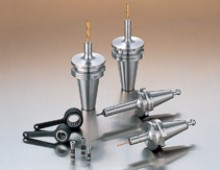
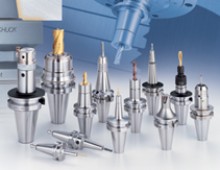
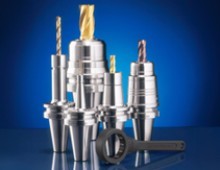
Many machine shops lack objective criteria for making toolholder purchasing decisions & most are made by price alone. However they can improve runout significantly by using the right toolholders.
Chattering and deflection have always been the bane of machinists’ existence, so much so that the sight of a long and slender tool holder will immediately cause goosebumps. If you understand why a long tool holder behaves the way it does, you’ll know that there are ways to fight back against this bending.
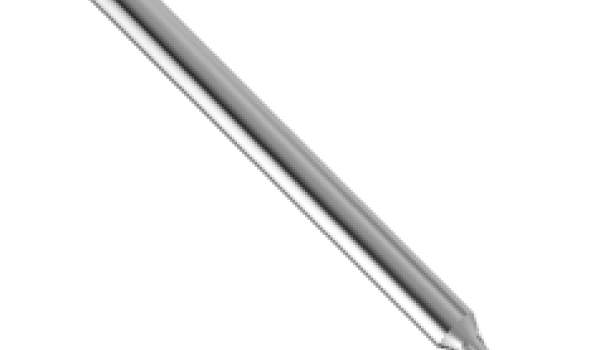
The Noventa Chamfering Tool is ideal for 90° front and back chamfering and deburring holes up to 4xd. It improves cycle time, tool life and surface quality.
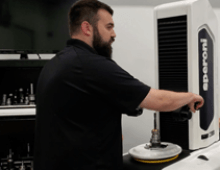
The SPERONI ESSENTIA features a compact bench-top design, works with any brand of router tools and handle complex tool profiles in stone cutting with ease.
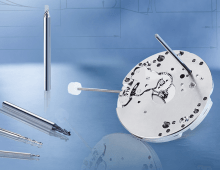
Micromachining, cutting where the volume of chips produced with each tool path is very small, is not a high-speed operation in relation to chip load per tooth. Rather, it involves a high spindle speed due to cutter diameter. The part may be physically larger, but details of the part require ultra-small profiles achieved only by micromachining. In other words, micromachining is not limited in scope to only miniature parts.
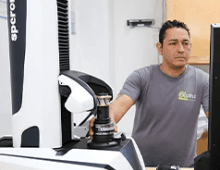
Current travel and visitor restrictions continue to disrupt the normal schedule of service calls to manufacturers. To keep our customers up and running, the BIG KAISER Tool Measuring Solutions Department offers remote maintenance sessions.
Jack Burley, president and COO of BIG DAISHOWA, shares some of his observations over the years, predictions for the industry and his vision for the company.
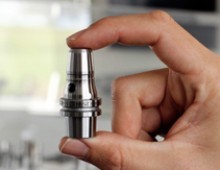
Discover how the right tool holder solved serious cutting challenges from reducing runout and streamlining operations to enabling efficiency and boosting part quality.
Explore the versatility of the HSK tool system. Learn about the types, advantages and best uses of HSK tool holders to optimize your shop’s efficiency.
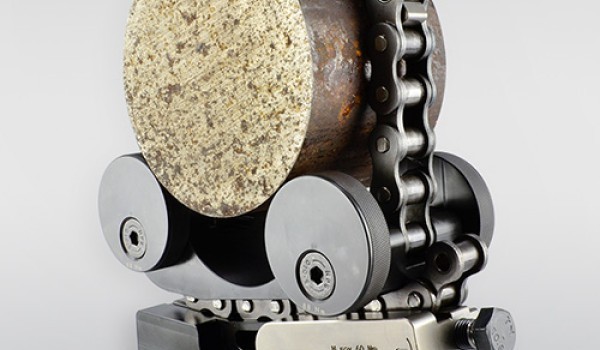
Chain clamping systems offer flexibility to hold workpieces of various shapes and sizes. The chain clamping system uses a series of interconnected chains with adjustable links and tensioning mechanisms to secure the workpiece firmly in place during machining.