Even the most well-planned boring process may not achieve the desired result. We’ve provided solutions to common rough boring problems to help get you back on the road to productivity.
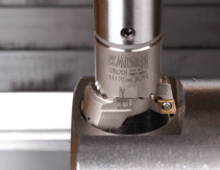
Fine boring heads provide high-precision finishing options for many applications, however, fine boring can be a delicate operation that can go awry. Check out these troubleshooting tips.
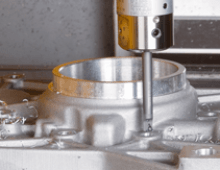
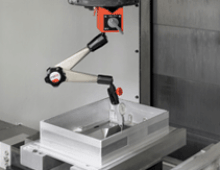
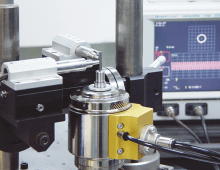
Good measurements make setups faster, reduce recuts and identify potential spindle or holder issues before they become bigger problems. Let’s look at a few of the key areas to measure and the handy solutions available.
With state-of-the-art toolholding technology, Jorge Rucoba’s machine shop doubled its process indicators and gained competitiveness in the Mexican mold market.
NASCAR teams are very meticulous in what they do – always on the lookout for ways to be more productive in their machining processes to improve their cars.
To realize new efficiencies and make things easier for end users, the name of the modular boring system connection was changed to be more in line with global standards.
When it comes to boring, there are several factors that can lead to poor performance. Whether it’s long cycle times, short tool life or poor bore quality, any or all these factors may need to be addressed in order to increase productivity. Although different, these issues are often closely linked in a given application.
When one variable can make an impact on the result, as in metalworking, it’s a good idea to eliminate as many as possible. Each BIG DAISHOWA part is built to fit precisely and work specifically within each finished product.
Boring tool performance depends greatly on the Length-to-Diameter (L:D) Ratio of the application. While this is a straightforward calculation, the Length and Diameter values to be used may not be that clear.