

Latest Posts

Troubleshooting for Fine Boring
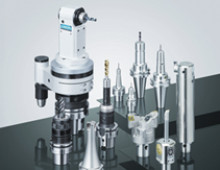
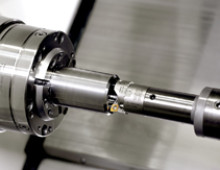
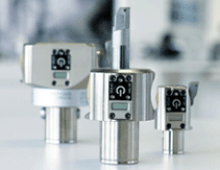
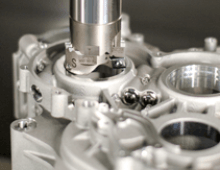
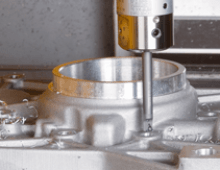
Fine boring heads provide high-precision finishing options for many applications, however, fine boring can be a delicate operation that can go awry. Under certain conditions, it might be necessary to modify or adapt recommended cutting data or tooling configurations of the application. We’ve provided solutions to common fine boring problems to help get you back on the road to productivity.
Need some help with your rough boring? Check out this troubleshooting guide for rough boring.
| Problem | Possible Cause | Remedy |
|---|---|---|
| Poor Tool Life | Wrong insert grade | Change to higher wear resistant grade |
| Excessive speed | Reduce SFM | |
| Poor cooling of insert | Apply through-tool coolant | |
| Excessive stock allowance | Decrease depth of cut | |
| Chatter & Vibration | Excessive speed | Reduce SFM, check cutting data tables |
| Extreme length/diameter ratio | Shorten tool to increase stiffness | |
| Increase boring bar diameter to larger size | ||
| Change boring bar to carbide or heavy metal | ||
| Wrong insert | Reduce nose radius of insert | |
| Use ground geometry inserts (ie: TAN18 grade) | ||
| Incorrect stock allowance | Check cutting data tables | |
| Poor Size Repeatability | Inaccurate tool changes | Worn and/or damaged tool shank; replace |
| Clean spindle and tool shank | ||
| Variation of stock allowance | Semi-finish with twin insert boring head | |
| Excessive spindle looseness | Use ground geometry inserts (ie: TAN18 grade) | |
| Unacceptable Roundness | Excessive boring tool imbalance | Change to auto-balance or balanceable head |
| Balance tool assembly | ||
| Reduce speed | ||
| Excessive cutting forces | Check stock allowance and feed rate | |
| Insufficient workpiece clamping | Check for uniform workpiece clamping | |
| Workpiece non-symmetrical | Reduce cutting forces; change to ground insert | |
| Increase cutting speed, reduce feed | ||
| Unacceptable Position | Original bore off position | Semi-finish with twin insert boring head |
| Excessive stock allowance | Decrease depth of cut | |
| Decrease insert radius | ||
| Reduce cutting forces; change to ground insert | ||
| Poor Surface Finish | Wrong insert radius | Use larger insert radius |
| Excessive feed rate | Reduce feed; maximum 25% of insert radius | |
| Poor chip evacuation | Increase bore to boring bar clearances | |
| Apply through-tool coolant; adjust nozzles | ||
| Change insert to higher rake angle | ||
| Check depth of cut | ||
| Taper | Premature insert wear | Change to higher wear resistance insert grade |
| Increase insert radius | ||
| Change from ground to pressed geometry insert | ||
| Increase coolant flow |
Categories
Tags:
Fine boring
Did you find this interesting or helpful? Let us know what you think by adding your comments or questions below.

Add new comment