

Latest Posts
Tooling for Exotic Alloys: Titanium & Inconel
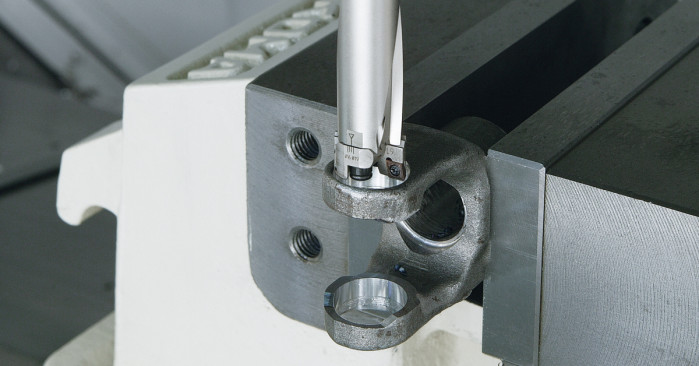
Shifting from machining a common metal like aluminum to a more demanding material like titanium or Inconel presents an entirely new cutting environment. In order to effectively cut these demanding metals, it’s important to know them inside and out.
We’ll explain the science behind heat generation and tool pressure, explain the unique requirements of titanium and Inconel machining and describe additional critical considerations like coatings and geometry changes.
Heat Management in Exotic Alloys
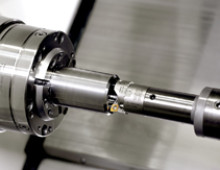
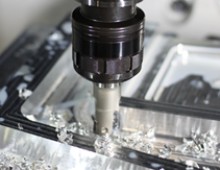
Machining is rooted in shear plane theory: when a tool compresses the workpiece beyond its yield point, it creates a plastic yield in the workpiece and shears material off of it. The shorn off material is called the chip. Once shorn, the chip moves up the cutting tool’s rake face in an area called the tool-chip interface. The chip creates intense friction, pressure and heat as it moves up. Managing the heat generated here is make-or-break for a machining operation. High temperatures can damage both the workpiece and the tool.
Thermal conductivity dictates where this built up heat will go. Aluminum dissipates heat rapidly through the chip and the workpiece, promoting a cool, optimal machining temperature. Titanium and Inconel are more insulating. Since they don’t dissipate heat, thermal energy builds up at the tool tip. Titanium and Inconel tooling is typically a slower process because faster tooling builds up more and more heat. Slower machining lessens the thermal load.
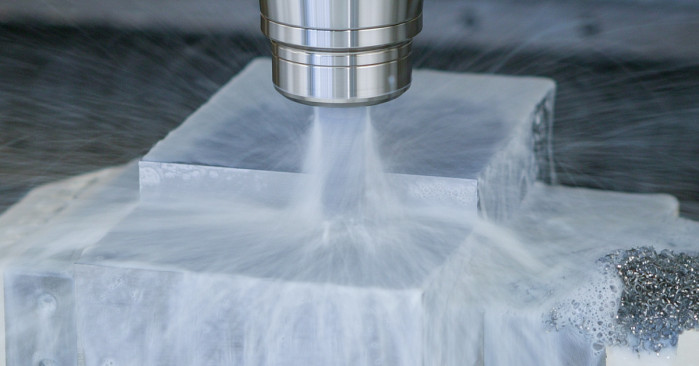
Coolant plays a vital supporting role in managing thermal load when machining exotic alloys. Flood coolant helps flush chips away from the cutting zone and lowers ambient heat around the tool. High-pressure coolant delivery goes further by driving fluid directly into the tool-chip interface, reducing friction and pulling heat away before it can accumulate.
Understanding Tool Pressure
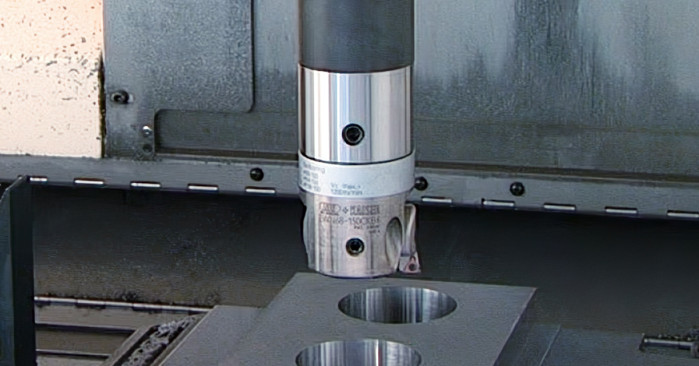
Tool pressure is another key consideration for super-alloy machining. Tool pressure is the force exerted by the tool onto the workpiece. Higher tool pressure creates more vibration, deflection and quickens tool wear if it’s not carefully applied.
Machining Titanium Fundamentals
Titanium has a much higher strength-to-weight measure than aluminum, which means it needs significantly more force to cut material. Titanium is also quite elastic. It tends to bounce away from the tool, leading to dimensional inaccuracies.
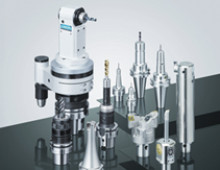
If tool pressure is too high, plastic deformation will harden the titanium surface (this is called work-hardening) and increase tool wear. High tool pressure can also cause severe vibration on titanium, which can destroy the workpiece and damage the tool. Tools like the BIG DAISHOWA Smart Damper effectively reduce vibration.
To properly machine titanium, machine operators must seek a low cutting speed to prevent heat buildup, high cutting force to work through its high tensile strength, and a moderate feed rate and sharp tool to prevent work-hardening.
Machining Inconel Fundamentals
High cutting force is also needed to work through Inconel. Inconel hardens even faster than titanium, so keep a close eye on your tool sharpness and feed rate to prevent work-hardening. Inconel also necessitates a slow cutting speed to prevent thermal damage, since this material is engineered for superior thermal resistance. Machining tools made of extreme heat-resistant materials like carbide can allow you to increase Inconel cutting speed.
Strategic Tooling for Inconel and Titanium: Special Considerations
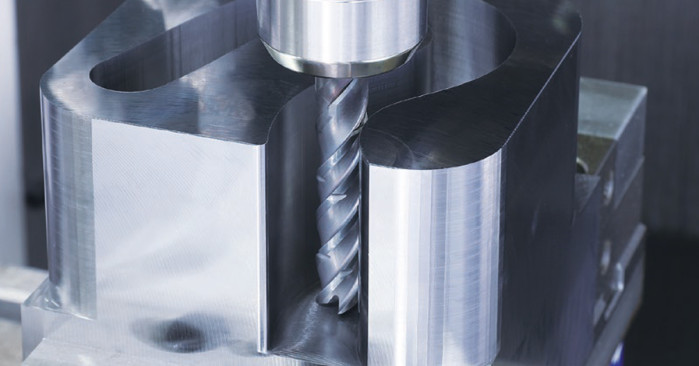
There are three more crucial adaptations to implement as you move from tooling aluminum to super-alloys like titanium and Inconel:
Geometry
- Aluminum: Optimized for free cutting, high speed and aggressive chip cutting (high positive rake, high helix angle, fewer flutes and generous flute spacing)
- Titanium: Optimized for free-cutting while balancing enough edge mass to handle deflection and work-hardening (moderately positive rake, sharper precision-honed edge and moderate helix angle)
- Inconel: Optimized for rigidity and edge strength to withstand high cutting forces (lower or neutral rake, stronger honed edge, lower helix angle and larger core diameter)
Coatings
- Aluminum: Uncoated carbide or ZrN (zirconium nitride) coatings provide excellent edge sharpness and cost effectiveness
- Titanium: AlTiN (aluminum titanium nitride) or TiAlN (titanium aluminum nitride) provide oxidation and heat resistance
- Inconel: AlTiN coatings and advanced nanocomposite variations provide extreme heat resistance
Additional Heat Management Tactics
- Aluminum: Standard full-width passes and conventional toolpaths
- Titanium: Trochoidal (high-efficiency) toolpaths keep heat from concentrating at the tool-chip interface
- Inconel: Chip thinning via a high-pressure coolant and trochoidal toolpaths are necessary for tool function
Partner with the Leader for Tooling in Exotic Alloys
BIG DAISHOWA produces premium machining tools that meet even the harshest demands of cutting forces in aerospace alloys like titanium and Inconel. Our tools are engineered to exacting standards, and manufactured using premium materials and expert craftsmanship to enable unmatched productivity, accuracy and repeatability in CNC machining operations. Contact us today to find the right tools for your super-alloy machining project.
Categories
Did you find this interesting or helpful? Let us know what you think by adding your comments or questions below.


Add new comment