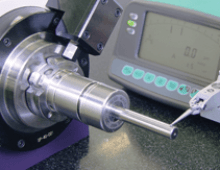
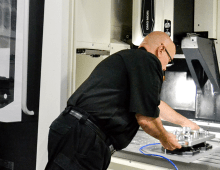
Runout is one of the sneakier issues machinists and tool managers must deal with. It’s almost impossible to recognize in-process and difficult to diagnose after the fact. We identify potential sources.
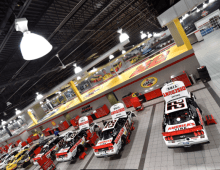
NASCAR teams are very meticulous in what they do – always on the lookout for ways to be more productive in their machining processes to improve their cars.
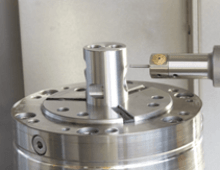
When it comes to aerospace components, the slightest imperfection could be catastrophic. Our experts answer five questions about boring precision holes on aerospace parts.
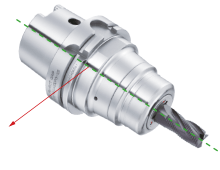
To achieve efficient tool life, proper finish and productivity in high-speed work, tool holders need to be as rigid, compact and short as possible to keep the whole assembly stable. Here's what you need to know when choosing a high-speed tool holder.
Understanding and controlling runout is crucial for any machine shop looking to maintain competitive advantages in today's precision-driven manufacturing environment.
When it comes to boring, there are several factors that can lead to poor performance. Whether it’s long cycle times, short tool life or poor bore quality, any or all these factors may need to be addressed in order to increase productivity. Although different, these issues are often closely linked in a given application.
As a raw material, tungsten carbide is a limited natural resource and a widely popular tool material due to its hardness and heat resistance. We can both save money by reducing the consumption of carbide and help our environment by fully utilizing every tool before recycling the rest.
ID boring is a common and time-consuming operation on CNC lathes. Common issues have led to the development of world-class boring tools—traditionally used on milling machines—that have proven to be just as effective on a CNC lathe.
Milling is a core operation in all kinds of manufacturing environments. Here are five different types of milling holders, each with their own strengths and weaknesses. We’re here to help you choose with a breakdown and tips for using each.
With state-of-the-art toolholding technology, Jorge Rucoba’s machine shop doubled its process indicators and gained competitiveness in the Mexican mold market.
Charlie Mitchell, machinist for Andretti Autosport, spent up to eight hours setting up his five-axis machine with 10 tools to run 30 to 40 different processes on a part. Using UNILOCK pallets, set-ups times are 70 to 80 percent shorter.