

Latest Posts
CAT Tool Holders Explained: The What, Why, When and How of America’s Original Tool Holding System
Key Points
-
CAT tool holders remain a reliable and versatile choice for many machining operations, with compatibility across a wide range of machines and applications.
-
Choosing the right size, style and premium features can greatly improve rigidity, accuracy and overall performance.
-
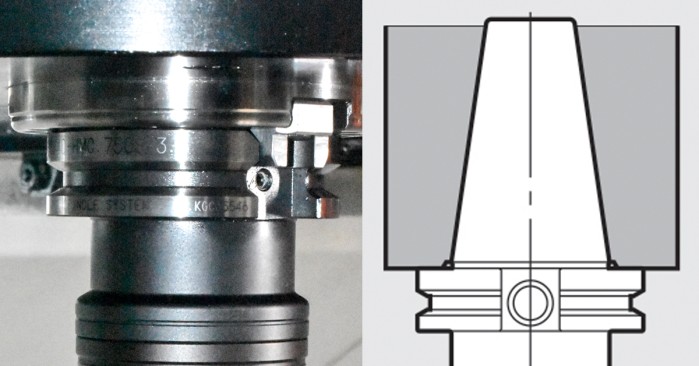
BIG-PLUS technology enhances CAT tool holders by providing simultaneous spindle face and taper contact, increasing stability and precision in high-speed and high-accuracy applications.
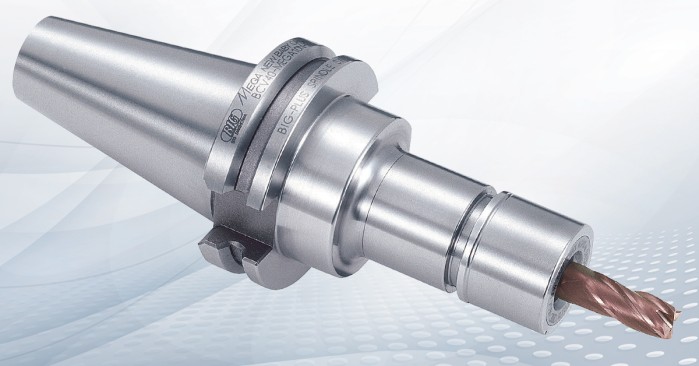
When it comes to spindle and tool holding systems, there’s one original that every machinist has likely encountered: CAT. Short for Caterpillar (yes, that Caterpillar!), it was invented about 50 years ago by engineers at the company, and quickly became the gold standard in the U.S. Steep-taper-style tool holders like CAT (and BT in Europe and Japan) dominated the market for decades, until the advent of other specialized systems like HSK and CAPTO. These systems rose in popularity by ushering in a new era in high-speed cutting and micromachining—allowing for speeds in excess of 50,000 rpm. But advances in CAT-type tool holders (including BIG-PLUS technology) mean that this tried-and-true system is still in heavy rotation in many machine shops.
What Is a CAT Tool Holder?
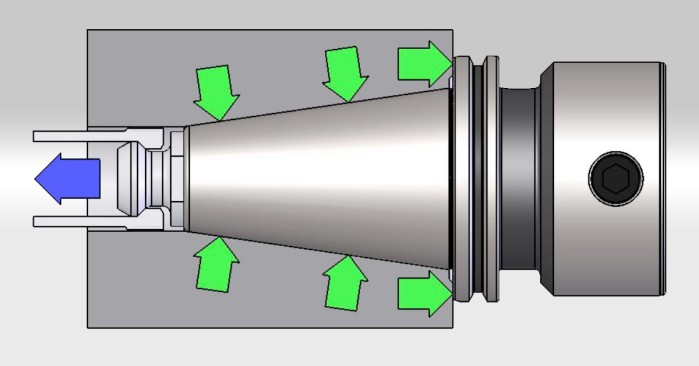
CAT tool holders are a type of steep-taper tool holder with a 7:24 taper ratio. As mentioned, they were invented in the 1970s by Caterpillar engineers, but the original design dates back to a patent filed in 1927 by Kearney & Trecker Corp., Brown & Sharpe Manufacturing Co. and Cincinnati Milling Machine Co. Think of CAT tool holders as the strong, heavy workhorses of the machining world: they are steady at reasonable speeds, reliable, powerful and efficient. Let’s take a look at their anatomy:
V-flange
The V-flange is an element of CAT tool holders that was intrinsic to its invention: the element that enables the use of automatic tool changers (ATC). It’s named for the V-shaped groove, which ensures that the ATC can lock onto the tool holder and facilitate spindle attachment.
Taper
As mentioned, another hallmark of the CAT system is its 7:24 taper. The taper is the interface between the tool holder and the spindle–a vital element that ensures rigid contact and repeatable centering between the two. In the case of steep-taper tool holders like CAT, it’s easily defined by its conical shape.
Retention Knob (Pull Stud)
Retention knobs, also known as pull studs, are the key element that keeps the tool holder attached to the spindle. They’re a small—but vital—component, but all too often overlooked. Using any old pull stud off the shop floor shelf can result in poor retention, which leads to chatter, poor quality and even catastrophic safety issues. Avoid issues by using premium quality retention knobs (same for all other tool holder components).
Key Features and Benefits of CAT Tool Holders
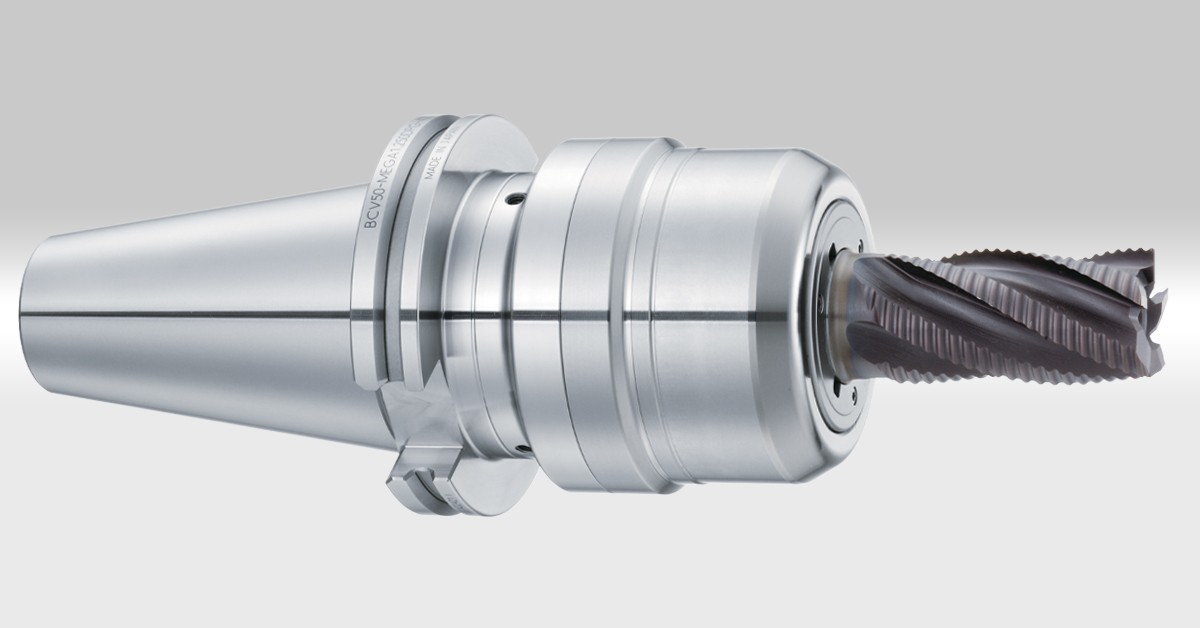
Steep-taper tool holders—CAT included—are perhaps the most common for a reason. They’re big and heavy for rigidity; they offer excellent application flexibility; they enable quick, efficient tool changes; and with technology like BIG-PLUS, they can offer the same dual-contact function as systems like HSK and CAPTO.
As mentioned, the V-flange was a notable design advantage when it was invented and continues to be a staple—enabling quick tool changes. The taper design of CAT tool holders is meant to provide high rigidity and accurate centering–ensuring even loads during cutting to help extend tool and spindle life.
Generally, however, any good tool holder should cover the previously mentioned benefits. So what makes CAT different? The all-purpose nature of this tool holder type is a big part of its appeal. Chances are, many of the CNC machines on your shop floor are compatible with steep-taper tool holding, and CAT tool holders are widely applicable to a variety of machining operations and tool types and sizes.
Factors to Consider When Selecting CAT Tool Holders
If you’ve made the decision to use (or are already using) CAT tool holders, you still have some choices to make in terms of size, brand, application, etc.
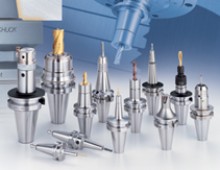
Sizing for CAT tool holders is fairly simple—most machining centers call for CAT40 or CAT50 sizes. Smaller machines and applications may use CAT30. CAT60 is another option but is much less common—only used in the very biggest machine tools.
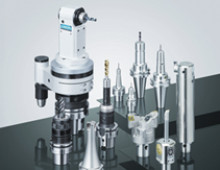
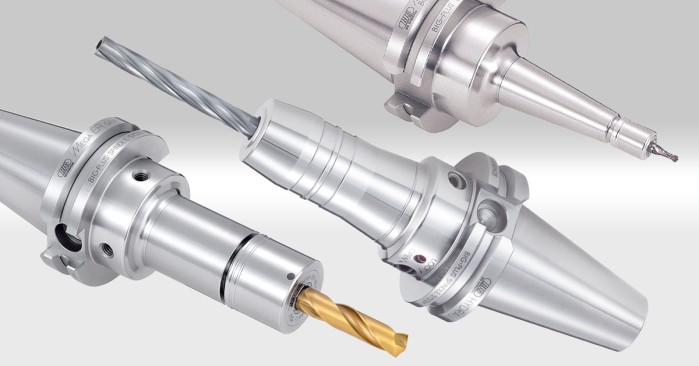
More importantly is your choice of tool holder type—from collet chucks to hydraulic chucks. The choices are almost endless, so it’s crucial to talk to a tooling expert about your specific applications and needs, but here are a few specific nuggets:
- CAT systems can accommodate micromachining too! Micro collet chucks feature a slim design vibration-minimizing features.
- Hydraulic chucks are a good choice for high-accuracy applications like automotive, aerospace, medical and die and mold.
- Choosing between shrink-fit and hydraulic holders for long-reach applications? Hydraulic tool holders offer great runout and repeatability, but only within their rated RPM. Shrink-fit holders are a bit more accommodating of excessive speeds but may have a slightly higher baseline runout.
- Regardless of the type of tool holder you choose within the CAT system, look for premium, value-added features that increase rigidity. This can be especially important because standard CAT systems are not dual-contact, which can increase the risk of vibration and chatter.
BIG-PLUS: The Best of Both Worlds
Speaking of value-added features, there’s one major option you can use to level up the performance of your CAT tool holding.
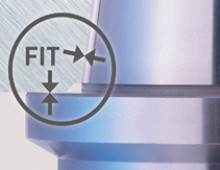
A shortfall of traditional CAT tool holding is that, unlike other tool holding systems like HSK and CAPTO, it is not inherently dual-contact—meaning standard CAT tool holders do not deliver simultaneous contact between the spindle face and the V-flange. This can be an issue in high-speed and high-precision cutting applications because a single-contact tool holding setup isn’t as rigid, potentially causing chatter and deflection.
Fortunately, longtime CAT users seeking the benefits of dual-contact tool holding don’t have to overhaul their machining operation. Chances are, BIG-PLUS dual-contact spindles are already in use on the shop floor. And in combination with licensed, CAT-style BIG-PLUS tooling, machinists get true dual contact between the spindle and tool holder. And the difference is significant—watch this video to see the performance of a standard CAT40 holder vs. a BIG-PLUS CAT40 holder.
Whether you’re a CAT loyalist or a user of multiple spindle-tool holder interfaces, investing in premium tool holding technology can make all the difference in your operation. Discover all the options available and talk to an expert today about your needs and challenges.
Categories
Did you find this interesting or helpful? Let us know what you think by adding your comments or questions below.
Add new comment