

Latest Posts


Common Boring Mistakes That Cost You Time and Money
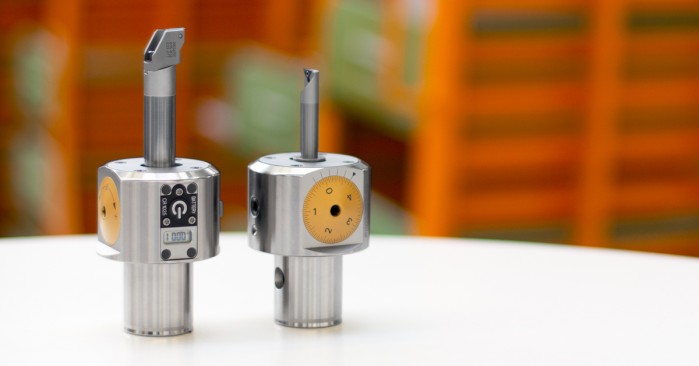
Fine boring is a delicate operation that can easily go awry. Even with careful planning, unanticipated issues can arise. That’s why it pays to have a troubleshooting guide outlining boring problems and solutions to help you modify or adapt recommended cutting data or tooling configurations.
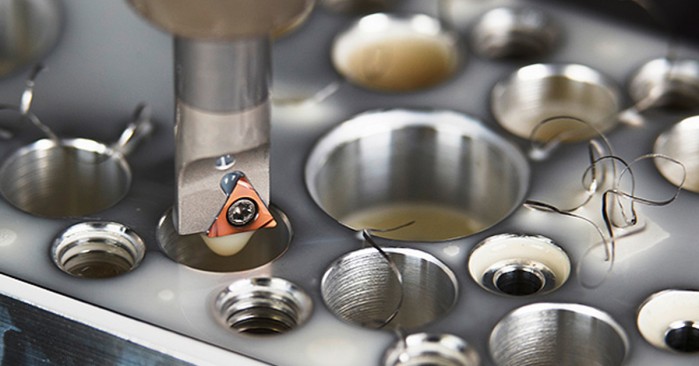
Boring Problem #1: Poor Tool Life
If you’re burning through inserts in your boring operation, it’s worth asking how you can optimize. The answer may involve several factors, so it pays to explore each potential cause to pinpoint the issue.
Possible Cause: Wrong insert grade
Remedy: Change to higher wear-resistant grade
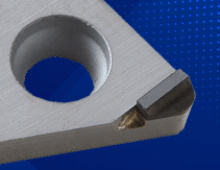
Especially when working with hard-to-machine materials, the grade and coating on your insert matters. Polycrystalline diamond tools (PCD) and Cubic Boron Nitride (CBN) are two of the hardest materials, ideal for finishing operations. PCD inserts, made from synthetic diamond, are ideal for non-ferrous materials like aluminum, magnesium and carbon fiber. CBN inserts excel in machining hardened steels and cast iron above RC50 because they handle much higher cutting temperatures and can be tailored to different applications.
When it comes to coatings, AlCrN (aluminum chromium nitride) has been a common high-strength coating thanks to its heat resistance and hardness. It’s best to talk to your tooling expert to get a personalized recommendation.
Possible Cause: Excessive speed
Remedy: Reduce SFM
Higher speeds create higher friction which increases heat—all of which can cause premature tooling wear. Especially in deep-hole boring and with hard-to-machine materials, you may have to reduce speeds to save your tools.
Possible Cause: Poor cooling of insert
Remedy: Apply through-tool coolant
As mentioned, more heat equals faster wear. In addition to getting your speeds right, the proper usage of through-coolant can help combat this issue and ensure better chip evacuation, which is crucial to successful boring.
Possible Cause: Excessive stock allowance
Remedy: Reduce the depth of cut
Finish boring tools are designed to go the final mile in your boring marathon. If you’re forcing them to work harder and remove more material, you’re increasing the chances of work hardening the part and wearing out your tools faster. Especially for hard-to-machine materials, consider reducing the depth of cut on final finishing paths to around .008” to .010”.
Boring Problem #2: Chatter & Vibration
Vibration is enemy #1 in many machining operations. It can be difficult to eliminate because there are so many potential causes.
Possible Cause: Excessive speed
Remedy: Reduce SFM, check cutting data tables
If you’ve ruled out all other fixable causes of chatter (tool holder deficiencies, machine issues), you may simply need to reduce your speeds. This is particularly a challenge in long-reach applications.
Possible Cause: Extreme length/diameter ratio
Remedy 1: Shorten tool to increase stiffness
Speaking of long-reach applications, excessive length-to-diameter ratios can cause vibration issues. If you’re able to shorten the tool length, try that. If not, Smart Damper technology can help by damping vibrations and reducing chatter in deep-hole finish boring. In fact, these tools can boost cycle times tenfold.
Remedy 2: Change boring bar to carbide or heavy metal
Carbide boring bars are an invaluable tool for finish machining in deep-bore applications. We recommend using them in conjunction with milling or hydraulic chucks.
Possible Cause: Wrong insert
Remedy 1: Reduce nose radius of insert
Insert geometry goes a long way in delivering a stable cut. While a larger nose radius can handle heavier cuts and higher feed rates, it can also result in excessive cutting forces and vibration.
Remedy 2: Use ground geometry inserts
Ground inserts have sharper cutting geometry, which can help with stability and chip removal, particularly in deep or long-reach applications.
Possible Cause: Incorrect stock allowance
Remedy: Check cutting data tables
Trying to remove too much material in finishing passes can cause chatter and vibration, so make sure you’re checking cutting data tables to ensure optimum stock allowance. Too little stock may cause the boring tool to deflect, rather than cut cleanly, which will also result in chatter and poor surface finish.
Boring Problem #3: Poor Size Repeatability
Nothing is more frustrating than when hole size is unpredictable. And it’s an issue that can affect your bottom line.
Possible Cause: Inaccurate tool changes
Remedy: Worn and/or damaged tool shank; replace
If your tool isn’t coming in and out of the spindle accurately and consistently, you can’t expect reliable hole sizing. And the root cause of inaccurate tool changes could be the tool itself—damage or excessive wear to the shank, which causes the tool changer to not be able to grip/transfer the tool accurately. Invest in new, reliable and high-quality tool holders.
Remedy: Clean spindle and tool shank
Similarly, even small amounts of debris or dirt on the spindle can throw off hole size repeatability. Clean and inspect your tool holder and spindle regularly.
Possible Cause: Variation of stock allowance
Remedy: Semi-finish with twin insert boring head
Twin boring cutters deliver a superior load balance in the cut, which can contribute to better hole roundness and positioning. Using twin boring cutters for roughing and even semi-finishing operations can help set you up for more consistent success in finishing.
Possible Cause: Excessive spindle looseness
Remedy: Use ground geometry inserts
Ground inserts are freer cutting, which creates less force in the cut that could be transferred back to the spindle.
Read more: 5 Fixes for Poor Boring Performance
Boring Problem #4: Unacceptable Roundness
Finish boring is especially susceptible to out-of-round holes because it absorbs radial force from one side (vs. rough boring heads which have inserts on both sides). As such, it’s best to make sure you’re starting with a round hole after roughing. If that’s not the issue, look into these possible causes.
Possible Cause: Excessive boring tool imbalance
Remedy: Change to auto-balance or balanceable head
Auto-balancing boring heads, which are designed specifically for the high-speed finishing applications, can help with imbalance issues. They work via a small internal counterweight that moves in direct proportion with each adjustment.
Remedy: Reduce speed
Tool imbalance is exacerbated by high speeds. Try slowing down cutting to see if hole quality improves.
Possible Cause: Excessive cutting forces
Remedy: Check stock allowance and feed rate
Don’t rely on finish boring to make heavy cuts. If you’re noticing out-of-round holes, you might need to adjust your stock allowance and feed rates.
Possible Cause: Insufficient workpiece clamping
Remedy: Check for uniform workpiece clamping
Hole roundness issues may have nothing to do with tooling or cutting parameters—check to make sure your workpiece is held firmly and uniformly in place.
Possible Cause: Workpiece non-symmetrical
Remedy: Reduce cutting forces; change to ground insert
A thin-walled part can deform machining, so taking a lighter final pass with a free-cutting ground insert can help minimize this issue.
Boring Problem #5: Unacceptable Position
The proper positioning of a hole starts in rough boring, so any issues that arise during fine boring operations often stem back to that.
Possible Cause: Original bore off position
Remedy: Semi-finish with twin insert boring head
As mentioned, twin boring cutters can deliver better reliability and consistency in terms of in-spec holes. Using them in a semi-finishing operation between rough and fine boring can reduce the risk of off-position bores.
Possible Cause: Excessive stock allowance
Remedy: Decrease depth of cut
As mentioned previously, leaving too much material for the finishing pass can result in a host of issues, including holes that are off position.
Remedy: Decrease insert radius
Optimizing the insert nose radius ensures that you minimize radial forces on one side and deflection of the tool, which can cause slightly off-position holes.
Boring Problem #6: Poor Surface Finish
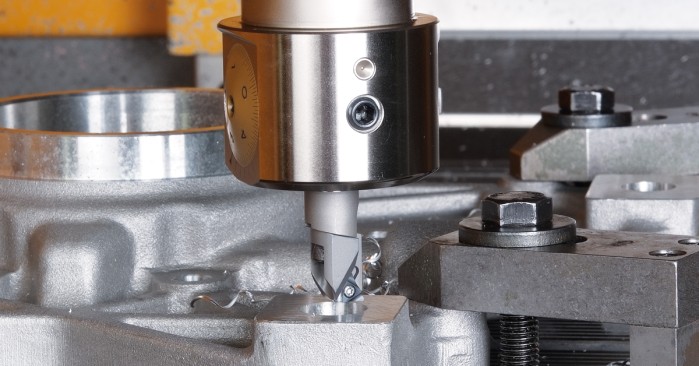
Fine boring is designed to perfect your hole–including surface finish, so issues in this area can be especially frustrating.
Possible Cause: Wrong insert radius
Remedy: Use larger insert radius
A larger radius gives a smoother surface finish with the same cutting feed rate, if the setup is rigid enough to handle the extra cutting force without chattering.
Possible Cause: Excessive feed rate
Remedy: Reduce feed
If surface quality is suffering, you may need to reduce your feed. A good rule of thumb is a maximum feed of 25% of insert radius.
Possible Cause: Poor chip evacuation
Remedy: Increase bore to boring bar clearances
Make sure you’re leaving enough room for your chips to properly evacuate the hole.
Remedy: Apply through-tool coolant; adjust nozzles
The right coolant type, application, pressure and position is crucial in helping to effectively evacuate chips
Remedy: Change insert to higher rake angle
A higher rake angle can help improve surface finish by reducing cutting chip size, which makes chips easier to evacuate from the cutting area.
Remedy: Check depth of cut
Reducing the radial depth of cut will create thinner chips, which can lessen the chances of scarring.
Boring Problem #7: Taper
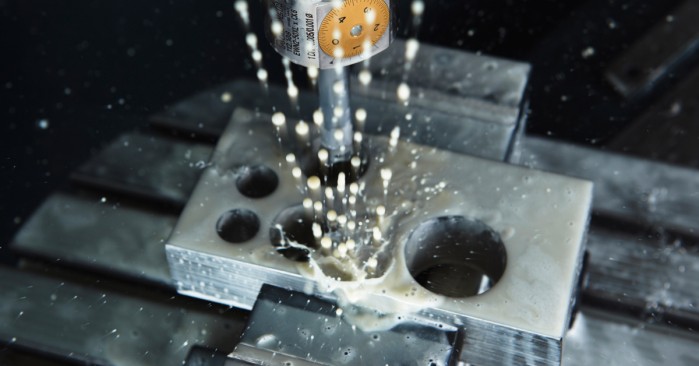
A tapered bore is often the result of the cutting edge breaking down as it progresses through the bore.
Possible Cause: Premature insert wear
Remedy: Change to higher wear resistance insert grade
Try a stronger, more wear-resistant insert grade or coating.
Remedy: Increase insert radius
A larger radius has more material in the cut to provide longer tool life.
Remedy: Change from ground to pressed geometry insert
Pressed geometry inserts deliver significantly longer tool life.
Remedy: Increase coolant flow
Reducing heat in the cutting process can help insert cutting edges last longer and combat tapered profiles, so make sure you have adequate coolant flow.
Read more: 5 Considerations for Boring Tool Selection
Fine boring may be a finishing operation, but the challenges it presents can have a major impact on your entire operation. By understanding common issues like chatter, hole quality and surface finish—and addressing their root causes with the right solutions—you can fine-tune your process for better outcomes. Keep this article and our printable troubleshooting guide close by to troubleshoot effectively and stay ahead of costly boring problems.
Still having issues? Contact a boring expert today.
Categories
Did you find this interesting or helpful? Let us know what you think by adding your comments or questions below.


Add new comment