

Latest Posts
From Downtime to Peak Performance: The Case for High-Precision Tool Holders
Key Points
-
Tool holders are a critical but often overlooked link in the machining process, directly impacting accuracy, productivity and part quality across all applications.
-
Real-world examples show that switching to high-precision tool holders can drastically reduce cycle times, improve surface finishes and extend tool life.
-
From aerospace to motorsports, manufacturers who invest in premium tool holders gain a competitive edge through improved performance, cost savings and operational confidence.

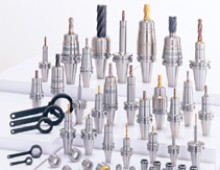
Is a good tool holder the glue that holds your job together? We think so. Not only because it can make or break efficiency, profits and part quality, but because it’s all too often overlooked. While inserts and tools do the cutting and the spindle does the spinning, both are dependent on the stability and quality of the tool holder.
In fact, one of the biggest cost savings to be had in your shop—achieving better tool life—isn’t solely dependent on speeds, feeds, programming or advanced insert grades and coatings; rather, the tool holder is the most constant variable across all applications. But don’t take our word for it. Read on to see real-life stories of how the right tool holder solved serious cutting challenges—reducing runout, streamlining operations, enabling efficiency and boosting part quality.

Project Saved With BIG-PLUS Tech
Mecanizados Laguna made parts for every industry from mining and automotive to food processing. But it faced a puzzling challenge while working on a large geared motor housing component. The part required multiple deep holes with extremely precise parallelism and tight tolerances in the cylinder liners; space constraints and material stress from oxyfuel cutting and welding made things even more challenging.
“We were struggling to get to the measurements we needed. Then, BIG DAISHOWA engineers' advice came to mind, and we turned to see our BIG-PLUS spindles,” explained Joel García, CNC machining manager at the shop.
Fully leveraging the power of their machine’s BIG-PLUS spindles with true, BIG-PLUS dual-contact tool holders was a game-changer. The solution delivered more rigidity, thanks to the simultaneous contact between the tool shank and spindle face. This quickly resolved the parallelism, circularity and concentricity issues. As a welcome surprise, productivity tripled. Now, operators could machine three holes per insert edge (as compared to one previously) and manufacturing time was cut in half—from one month to just two weeks.
It wasn’t just about the technical successes. Instilling confidence with key clients—and ensuring repeat business—was perhaps the biggest win.
Tool holder for the WIN: BIG-PLUS Dual-Contact Tool Holders

Better Molds With Better Milling Chucks
The mold manufacturing market in Mexico is competitive and the requirements are steep: tough-to-machine hardened steels, tight tolerances and mirror-like surface finishes. In 2019, Jorge Rucoba's Monterrey-based machine shop Taller de Maquinados was in desperate need of a productivity edge. Despite investing in new CNC equipment, the shop still had issues. Machining processes were slowing, sometimes by as much as 50%; tool wear, poor surface finishes and low machining accuracy were becoming common; and setup and cycle times were simply unacceptable.
After determining that the issues weren't due to the new machining center, BIG DAISHOWA engineers traced the issue back to poor tool holding performance. By switching to Hi-Power Milling Chucks, the shop immediately saw dramatic improvements: machining speeds more than doubled (from 400 to 800 SFM, 80 to 200 IPM and 3,300 to 4,400 RPM), improving total cycle times by 50%. What’s more, tool life was extended by 80%, significantly reducing production costs. The new milling chucks are so reliable, Rucoba says he’s confident enough to let machines run unattended.
The improvements have helped the shop attract new clients and establish itself as a competitive player in Mexico's growing mold market.
Tool holder for the WIN: Hi-Power Milling Chucks

Taking Flight With Advanced Tool Holding
When you’re supplying components for Blue Origin space flights, perfection is mission-critical. Baker Manufacturing was eager to deliver, but the challenges of complex, closed-angle features and exotic materials—including Inconels, titaniums, and even experimental alloys with unknown chemical compositions—aren’t for the faint of heart. Under the gun with tight deadlines, the shop needed to have an extensive, flexible tooling collection at the ready.
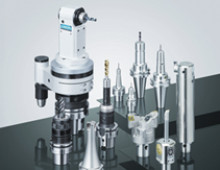
Some of the best investments in its inventory? Tony Baker says the BIG DAISHOWA universal angle heads, which help operators access difficult angles and complex pockets; and the BCV50-Mega Series milling chucks with BIG-PLUS dual contact technology.
The vibration-damping capabilities of the milling chucks make dollars and cents for the shop—to the tune of thousands. By delivering better tool life, $400-$600 nine-flute mills can machine 20 parts instead of just one. Not to mention the reduced risk of ruining a $10,000 aerospace workpiece.
With these two tool holders in its arsenal, the sky (or rather, space) is the limit for Baker Manufacturing.
Tool holders for the WIN: BCV50-Mega Series Milling Chucks and Universal Type Angle Heads

Prototyping for Success with Micro Tool Holding
When it comes to prototyping, Trek Bicycle's Development Lab doesn’t like to spin its wheels. In fact, when an engineer proposes a new part idea, the lab has only 10-14 days to turn around the prototype—a fresh programming challenge every single time.
The challenge of creating new, one-off bicycle components with complex 3D surfaces and deep, tight pockets requires toolholding solutions that provide excellent accessibility without sacrificing rigidity or time-consuming setup procedures.
After getting a new 5-axis machine, Trek used CAM software to program a tool path that would enable the machine to automatically tilt to avoid tooling/workpiece collisions. But with standard ER 32 or 16 tool holders in a deep and tight pocket, the machine had to tilt significantly to clear the body of the holder, which meant excessive axis movements and the potential for machine collisions.
Extensions weren’t an option due to the runout they would create, and expensive shrink-fit holders weren’t worth it.
BIG DAISHOWA’s MEGA Micro Chucks came through in the clutch, with ultra-slim nut diameters as narrow as 0.394" and shallow taper angles that deliver rigidity and superior pocket access. The profiles and shape of the chucks was the same as the shrink-fit holders they were considering, but with the added flexibility of collets.
Cory Marty, Trek’s senior engineering technician, estimated that this solution immediately eliminated about 50% of their reach issues, and reduced machine tilting to just 10 degrees, enabling higher speeds and feeds and better surface finishes. All without unnecessary expenditures on tooling extensions or less-than-ideal shrink-fit setups.
Tool holders for the WIN: MEGA Micro Chucks

Racing Against Time With Precision Tool Holding
In racing, every second matters—and for Team Penske, that urgency extends to the machine shop. Any improvement made in a part could add up to crucial time shaved off each lap around the track. What’s more, shop teams are operating on the fly, modifying parts constantly between races—sometimes in as 6-8 hours. It all adds up to about 50,000 parts annually across 2,000 part numbers, all of which require championship-level precision. And because cars must be lightweight, components are usually made from tricky materials like aluminum, titanium and steel components, with the need for extended reaches and tolerances as tight as ±0.0005".
So when it comes to tool holding, success requires a strategic combination. For Penske, it starts with Mega ER collet holders, which eliminated deflection and runout issues in long-reach reaming operations, achieving less than 0.0002" runout on 10"+ extensions. Next, Hi-Power milling chucks solved vibration problems in high-speed aluminum applications, allowing spindle speeds to increase from 1,834 to 2,620 SFM while extending tool life by 30%. Finally, digital boring heads boosted precision even more by eliminating test cuts and enabling real-time adjustments down to 50 millionths, resulting in 80% faster bore finishing processes.
The real benefits come when rubber meets the road: Team Penske has dozens of wins under their belt, proving that precision tooling can be the difference between victory and defeat.
Tool holders for the WIN: Mega ER Collet Holders, Hi-Power Milling Chucks, Digital Boring Heads
Now you’ve heard the case for premium tool holding technology. But how do you know what makes it premium and which tool holders will achieve the results you need? Read more about how to evaluate tool holder quality here, or talk to a BIG DAISHOWA expert today about your needs and challenges.
Categories
Did you find this interesting or helpful? Let us know what you think by adding your comments or questions below.
Add new comment